

“Authority isn’t given; it’s coded. ”

The Manuscript Archive
Ancestral Provenance & Systems Resiliency
The Avo Sangro Research Archive is an independent private initiative executing complex provenance tracking, historical risk modeling, and ancient structural analysis. Our lab curates, translates, and authenticates a 2,000-year-old family archive spanning Galilee, Jerusalem, and Southern Italy. Managed in coordination with institutional repositories, including the Vatican and Italian State Archives, our research validates centuries-old governance mechanisms and structural survival models to engineer foundational methodologies for modern, automated networks facing commercial and institutional volatility.

The Three Core Pillars of Avo Sangro
We align technical insight with disciplined execution to provide measurable gains across operational, financial, and strategic domains.
Pillar 1: The Historical Research Archive
The Mission: Preserving and authenticating the original hardware of Western consciousness.
The Scope: A curated, 2,000-year multi-generational manuscript collection spanning Galilee, Jerusalem, and Italy.
The Validation: Documented and verified in collaboration with the Vatican and the Italian State Archives.
The Purpose: Serving as a structural testing lab where ancestral scripts and ancient organizational logic are translated into modern risk frameworks.
Pillar 2: Data Architecture & Systems Design
The Mission: Engineering resilient, AI-native business data frameworks.
The Problem: Modern automated algorithms and Machine-to-Machine (M2M) procurement ecosystems are fragile and prone to systemic errors or format corruption.
The Solution: Designing decentralized network structures and automated data governance frameworks based on centuries-old verification models.
The Technology: Mapping ancient self-verifying logic into secure software environments to ensure data format integrity across multi-tier networks.
Pillar 3: Corporate Governance & Strategy
The Mission: Applying historical structural models to complex business operations.
The Problem: Modern corporate transitions, market volatility, and mergers and acquisitions (M&A) create catastrophic operational blind spots.
The Solution: Using ancient institutional blueprints to engineer business turnarounds and protect long-term asset stability.
The Practice: Re-architecting corporate policies to enforce radical, transparent fiduciary oversight and eliminate deceptive dashboard theater.
Pillar 1: The Historical Research Archive
Our Archive is what differentiates us from the rest, and is the anchor for our entire initiative. It operates on a foundation that combines sweeping historical epic with precision-level corporate mechanics. Our Lab’s data frameworks and corporate governance practices are simply the modern interface for the hard-won survival lessons contained in our ancient papers.
In essence, the Archive is treated not as a graveyard of dead history, but as a multi-century laboratory showing exactly how a single human network survived empires, plagues, wars, and transitions of empire without losing its identity.
Geography & The Bloodline
The historical timeline of our family archive traces an astonishing trajectory across centuries, shifting from the ancient Near East into the heart of the Italian aristocracy.
The lineage begins in Galilee and Jerusalem, capturing the transition of localized legal and structural authority during one of the most volatile eras in human history.
As the bloodline migrated into Southern Italy, the Archive's records anchored themselves in places like Pompeii and Caserta. These documents reflect a family surviving the collapse of the Roman Empire, major volcanic eruptions, and shifting feudal powers by embedding themselves deeply into regional agricultural and trade systems.
A large portion of the physical records maps the family's presence in Naples and Messina, Sicily, where we became integrated into the complex merchant and noble web of the Kingdom of the Two Sicilies.

What the Archive Contains
Rather than a stiff collection of grand political decrees, the Archive is treated by the Lab as a living, breathing social and commercial network composed of deeply personal and operational human artifacts:
Our Merchant Ledger & Trade Letters
These documents form the logistics data of the past. They outline how goods were moved between Messina, Campania and the Near East, how debt was tracked, and how contracts were honored across borders without modern banks. The Lab studies these to understand how trust was maintained over huge distances when communication was slow and hazardous.
The Love Letters & Personal Correspondence
These papers provide the human narrative layer. More than romantic relics, they are ethnographic evidence of how interpersonal and marital alliances were forged, how family loyalty was cemented, and how deep tissue memory was passed down through generations. They reveal the relational ethics that kept the network stable when identity was compromised (the events of the Inquisitions), and formal governments collapsed.

The Role of the Archivist: Vittoria Giannone, MBA
While both founders apply these concepts to global procurement portfolios, mergers, and corporate systems, the preservation and conceptual translation of the Archive itself is spearheaded by Vittoria Giannone, who serves as Curator.
Based out of a historic palazzo in Naples, Giannone actively maps what she describes as the original hardware of Western consciousness. Her research focuses on analyzing the ancestral scripts and structural rules of these documents to understand how ancient systems processed their cultural data to create a relational and ethical network.
Pillar 2: Data Architecture & Systems Engineering
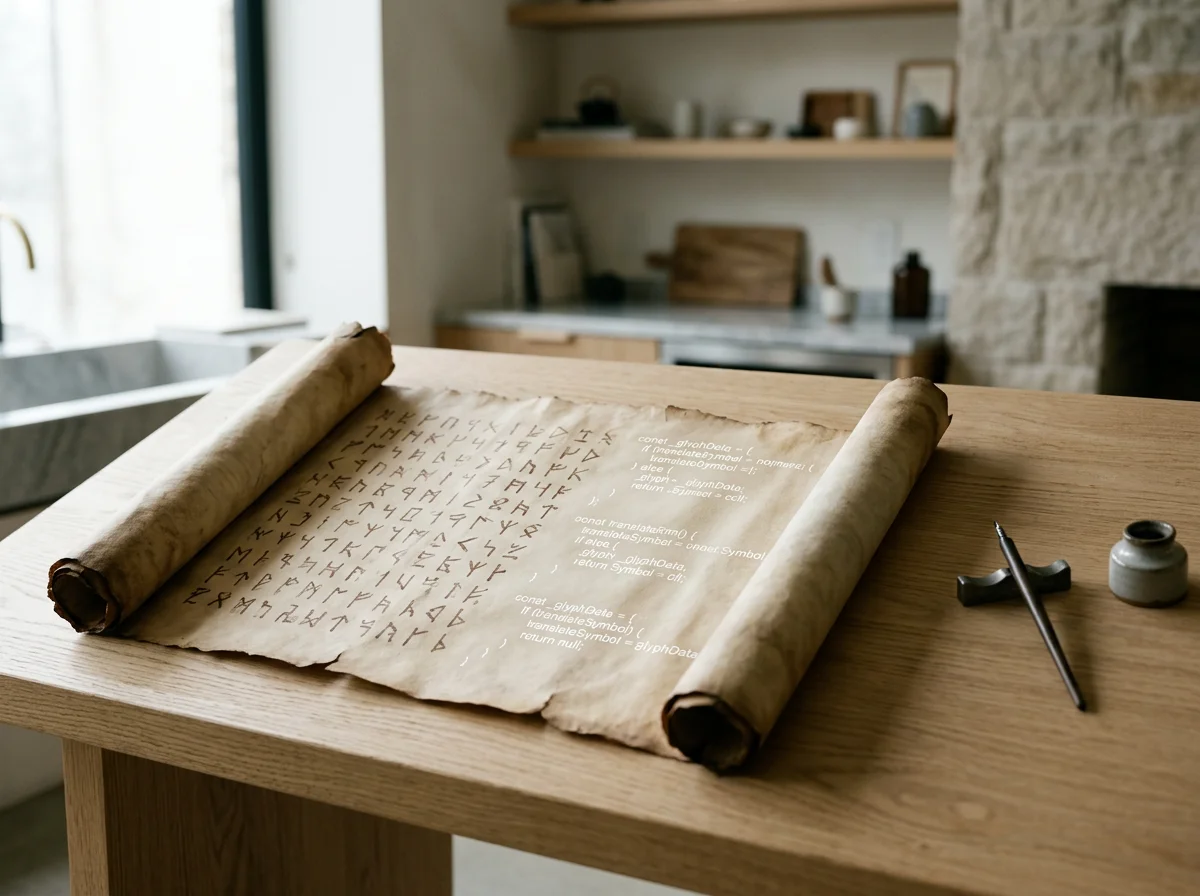
When we talk about translating historical document structures into modern data code, we aren't literally converting Latin or ancient Greek verbs into Python commands. Instead, we look at the logic systems ancient organizations used to protect data, and rebuild those exact concepts inside modern technology.
In short, we are studying and archiving how ancient societies successfully passed down trusted information across generations without a single, centralized database, then writing that survival logic into modern software to make corporate AI tools safer and more resilient.
The Modern Problem: AI and Supply Chains Are Fragile
In modern global business, enterprise systems rely heavily on automated algorithms and artificial intelligence to move goods, sign contracts, and buy services. However, these systems face huge risks. If data passes through ten different corporate networks, the format may change, things may get lost in translation, and the truth may get corrupted.
If a Machine-to-Machine (M2M) procurement system makes a contract entirely on its own, it has no native concept of historical context or human fiduciary oversight, meaning it can optimize itself into a catastrophic error because it lacks structural boundaries.
The Ancient Solution: Decentralized Trust
Two thousand years ago, the Roman Empire, regional authorities, and prominent families had to manage complex logistics, supply chains, tax collecting, and legal agreements across thousands of miles. They had no internet and no central computers.
To prevent fraud and ensure that a message from Rome was authentic when it arrived in Jerusalem for instance, they designed incredibly strict document architectures.
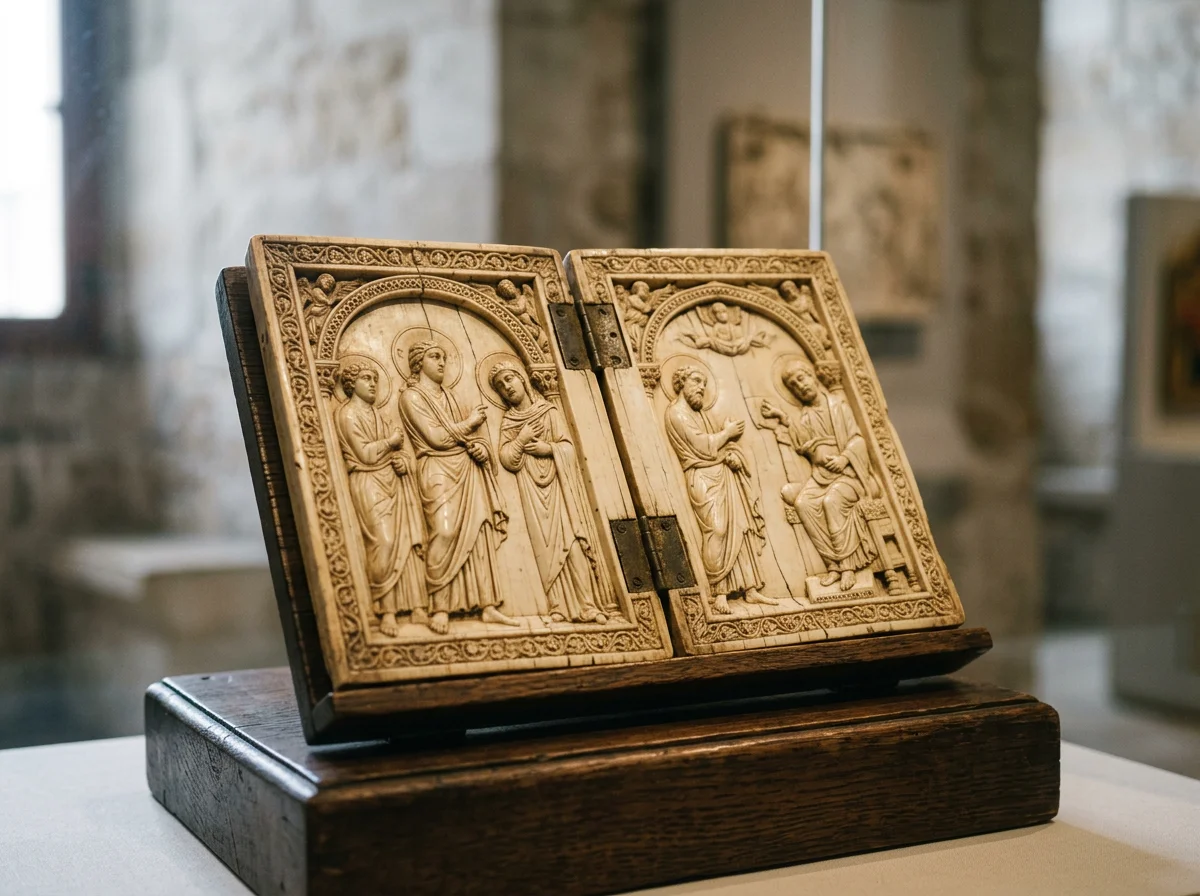
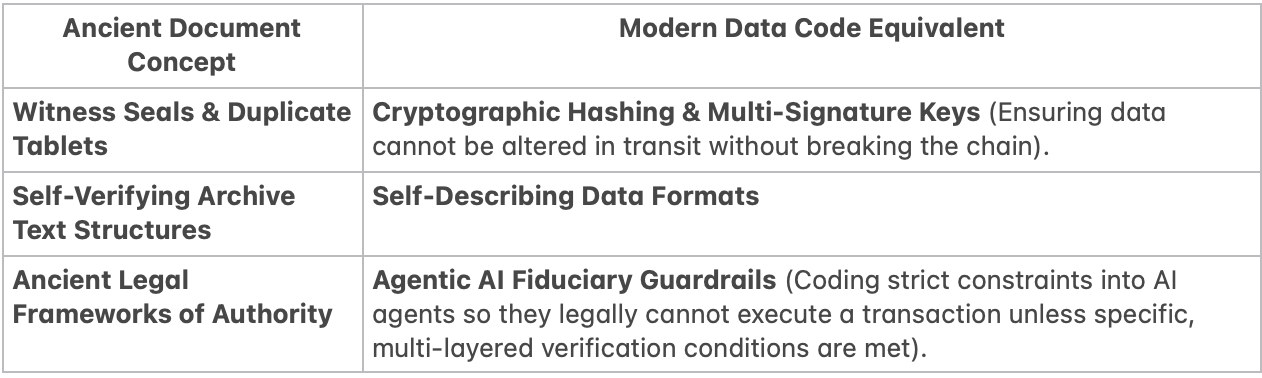
Utilizing chirographs and diptychs, documents were written in identical duplicates on two sides of a tablet, tied, and sealed with wax by multiple witnesses. To verify structural integrity, authenticity and a lack of tampering, they simply checked if the structural layout, specific seals, and text matched perfectly on both sides.
Their processes created immutable ledgers; physical systems of record-keeping that could survive political collapse, war, and shifts in authority because the structure of the document itself carried its own proof of validity.
How it Translates to Data Code
At Avo Sangro, we look at these centuries-old structural models as blueprints for decentralized logic. Instead of treating an ancient text like a museum piece, we analyze the mathematical relationships, verification workflows, and authentication methods built into the historical archives. We then program those exact rules into data schemas:
Pillar 3: Corporate Governance & Strategy
At its core, business is nothing more than human relationships, contracts, logistics, and institutional survival. When a company endures a transformational change, such as merger, supply chain crisis, or navigating market volatility, these problems are fundamentally human and operational.
Here at the Lab, we translate ancient historical principles to solve these real-world corporate challenges through several distinct strategies:

Building Anti-fragile Supply Chains
Most modern businesses design supply chains for efficiency (getting things quickly and cheaply). But when a global crisis hits these systems break, because they were designed to be hyper-efficient, not hyper-resilient.
The Ancient Insight
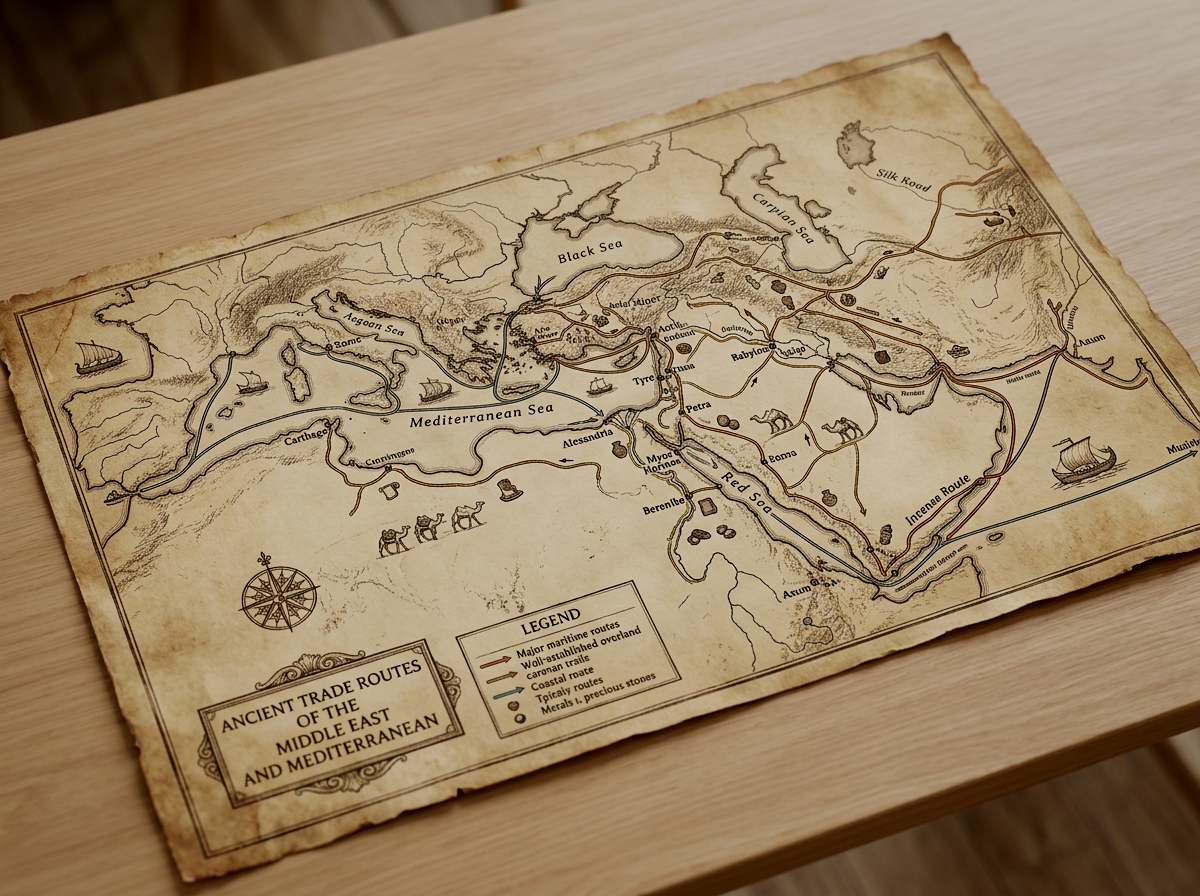
Ancient supply chains—like shipping grain from North Africa to Rome—had to survive pirates, shipwrecks, plagues, and wars. They survived because they were designed for anti-fragility (the ability to get stronger or pivot under stress). They relied on highly decentralized, multi-site backup systems rather than a singular perfect route.
The Modern Business Application
The Lab applies these ancient risk frameworks to corporate procurement portfolios, helping large enterprises design multi-site manufacturing and logistics strategies that can handle severe commercial volatility. If a war, a tariff, or a local factory fire shuts down one supplier, the business doesn't ground to a halt; its operational structure is built to automatically divert resources through alternative paths.

M&A Stabilization: Managing Corporate Amnesia
When Company A buys Company B, the transition creates a chaotic mess in the form of employee attrition, failed processes, and the loss of tribal knowledge.
The Ancient Insight
Ancient kingdoms and merchant families routinely collapsed or were conquered, yet their trade networks and community structures survived. They achieved this by building deep tissue memory into their organizations, meaning responsibilities weren't tied to a specific king or CEO, but were embedded into the community's cultural rituals and explicit legal covenants.
The Modern Business Application
When helping a company stabilize after a Merger & Acquisition (M&A), we use these historical models to map out a company's internal ecosystem. Instead of just combining IT systems, we redesign the human workflows so that mission-critical operational knowledge isn't held by just one person (who might leave), but becomes the connective tissue of the organizational itself.
Navigating Corporate Longevity (The Turnaround)
Many modern corporations fail within decades because they panic during market shifts and lose their core identity.
The Ancient Insight
Institutional validation changes over time. To survive for centuries, an entity cannot rely on rigid bureaucracy; it must rely on its core sovereign identity and curated adaptability.
The Role of the Executive: Angie Ash, JD
While both founders apply these concepts to global procurement portfolios, mergers, and corporate systems, the strategic deployment and modern legal execution of these frameworks is spearheaded by Angie Ash, who serves as Vice President and executive strategist.
Based out of the Dallas-Fort Worth Metroplex, Ash maps these ancient structural models onto corporate operations, enterprise tech sourcing, and volatile supply chains. Her work focuses on translating historical relational ethics and deep tissue memory into rigorous corporate governance policies that enforce radical fiduciary truth and manage risk.
In essence, if the Archive is the foundational code, Ash acts as the architect who implements it—ensuring that modern corporations can navigate massive transitions, market pivots, and AI integrations without losing their operational integrity or human oversight.
The Modern Business Application
We explicitly leverage our background working with distressed companies and startups to engineer business turnarounds. By looking at how ancient organizations successfully adapted their identities across generations without breaking their core foundations, we help modern businesses restructure their long-term asset stability and contracts so they can pivot during massive market shifts.

By studying history, the Lab essentially acts as a corporate counselor and structural architect.
Our data frameworks and corporate governance practices are simply the modern interface for the hard-won survival lessons contained in our ancient papers.
We look at the messy, human elements of business—trust, chaos, change, and risk—and use 2,000-year-old survival strategies to make modern corporations more resilient, honest, and stable.
A Selection of Ancestors who Inspire Our Work

The Pope: Pope Clement X
The familial connection tracing back to Pope Clement X (born Emilio Bonaventura Altieri, who ruled the Papal States from 1670 to 1676) anchors the Archive in the supreme legal, diplomatic, and bureaucratic heights of early modern Europe.
Clement X’s pontificate was characterized by intense geopolitical chess, navigating massive international pressures while quietly challenging entrenched systems of persecution. Most notably, in October 1674, Clement X took the unprecedented step of suspending the proceedings of the Portuguese Inquisition.
He aggressively challenged the brutal, secretive techniques weaponized against the New Christians (Neofiti), the descendants of Jewish families who had been forcibly converted to Catholicism generations prior. Furthermore, he actively protected the Roman Jewish community by banning the cruel, degrading tradition of forcing Jewish citizens to be chased through the city streets during the Roman Carnival.
The Cross-Cultural Trauma & The Inquisitions
It is worth noting here that because the family lineage traces a continuous arc back to ancient Galilee and Jerusalem, its historical records and genealogies are intertwined with the deep generational trauma of the European Inquisitions.
As Jewish communities migrated from the Levant through Messina, Naples, and Campania, they encountered successive waves of state-sponsored religious persecution. Merchant networks and families of Jewish heritage were forced to survive the Spanish Inquisition (which shattered Southern Italy in the late 1400s and 1500s) and the neighboring Portuguese Inquisition. The families in our network, our relatives and ancestors, had to navigate forced conversions, property confiscations, and shifting legal categories (Neofiti vs. Old Christians) just to preserve their lives, cross-border commerce, and family records.
The Institutional Meaning for the Lab
Tracing a line to Pope Clement X provides the Lab with a master blueprint for navigating hostile, compliance-heavy systems. The intersection of an ancient Jewish-Italian heritage with a reigning Pope highlights a profound paradox: surviving systemic persecution by mastery of the legal and bureaucratic machine itself.
By studying how informal, cross-cultural merchant networks of Neofiti successfully lobbied the Vatican to halt the Inquisition, the Lab learns how decentralized groups can safely navigate corrupt or hostile networks.
Clement X's legacy teaches the Lab how to build resilient administrative guardrails. We translate his historic containment of the Inquisition into modern corporate governance frameworks designed to protect human agency, enforce absolute fiduciary truth, and prevent automated algorithmic or corporate structures from becoming engines of blind systemic harm.

The Architect: Antonio de Simone & The Royal Palace of Caserta
Our 4th great-grandfather was the nephew of Antonio de Simone, one of the architects of the Royal Palace of Caserta.
Antonio de Simone was a prominent court architect in the late 18th and early 19th centuries, who famously directed major phases of design and modification for the Bourbon Monarchy at the majestic Royal Palace of Caserta (the Reggia di Caserta), bridging classical styles into the Napoleonic era under Joachim Murat.
The Institutional Meaning for the Lab
Beyond being a fun piece of family trivia, it reflects our Archive’s historical insights into large-scale project management and spatial engineering. Building a palace like Caserta required organizing thousands of workers, raw materials, and massive financial transactions over decades without modern tools. The Lab uses the structural logic of these physical building projects to map out modern enterprise data architecture.
The Royal: King William II of Sicily
The familial connection tracing back to William II of Sicily (known as William the Good, who ruled the Norman Kingdom of Sicily from 1166 to 1189) anchors the Archive in the apex of medieval Mediterranean power.
William II's reign was famous for two things: incredible cultural synthesis (blending Latin, Greek, and Arabic governance models) and massive administrative systems. He famously built the breathtaking Cathedral of Monreale and established highly sophisticated, decentralized financial frameworks.
The Institutional Meaning for the Lab
Tracing a line to a Norman-Sicilian king provides the Lab access to records of a kingdom that successfully managed complex naval trade networks across the Mediterranean. By analyzing how William II's administration managed risk, distributed authority, and verified state records across a fractured empire, the Lab derives its principles for anti-fragile logistics and secure modern corporate framework.

OUR IP: VITTORIA 808
Machine-Executable Procurement Governance for the M2M Economy
Executive Overview
As autonomous AI agents scale past human-interfacing dashboards into independent economic actors executing capital on decentralized networks, they face a dangerous operational vacuum. Left to transact in a vacuum, agentic workforces encounter critical edge-case snags, compliance drift, and transactional deadlocks that native coding protocols cannot contemplate.
Vittoria 808 delivers the deterministic operational steering wheel for the Machine-to-Machine (M2M) marketplace. This framework is specifically engineered for Private Equity firms, Web3 Protocols, and Decentralized Autonomous Organizations (DAOs) deploying autonomous agentic workforces within high-stakes financial environments.

Core Architecture
Deterministic Execution Checklists: Leverages an integration layer utilizing Retrieval-Augmented Generation (RAG) to pull bite-sized, operationally sound Statements of Process (SOPs) into an agent’s active context window on the fly, preventing execution drift.
Exponential Reduction in Compute Costs: Eliminates the commercial unsustainability of running agents with bloated, 24/7 context windows. Vittoria 808 loads specific checklists for the exact millisecond of transaction execution and flushes the data immediately afterward.
Absolute Enterprise Privacy: Proprietary corporate governance, M&A checklists, and contract optimization strategies remain securely ring-fenced off-chain in an encrypted, wallet-verified database—guaranteeing institutional-grade data privacy while maintaining complete machine autonomy.
Public Ledger Optimization: Keeps heavy operational text files off public networks, leaving high-throughput ledgers like Solana to do exclusively what they do best: instant, trustless cryptographic identity verification and atomic settlement.
Operational Arenas of M2M Stabilization
M&A Sourcing & Transition Governance: Managing asset transfers, vendor continuity tracking, and critical path contract assignments.
Critical Contract Negotiation: Enforcing automated contract rationalization, supplier optimization parameters, and executing performance-based SLA protections.
Web3 & DAO Compliance: Executing autonomous dispute resolutions and automated, trustless on-chain handshakes.
Developer Registry Node
The foundational configuration schemas (.json), agent integration parameters (.yaml), and the complete technical whitepaper are open-source and hosted on our global developer registry node.
Access the Repository: github.com
© 2026 Vittoria 808 // A Development Lab Module of The Avo Sangro Research Archive. All rights reserved. Framework architectures, methodologies, and concepts are the proprietary intellectual property of the authors. Token-gated database access is subject to licensing terms.
Over 30 years of combined M&A, Private Equity, Corporate Procurement & Supply Chain Expertise.
ABOUT US
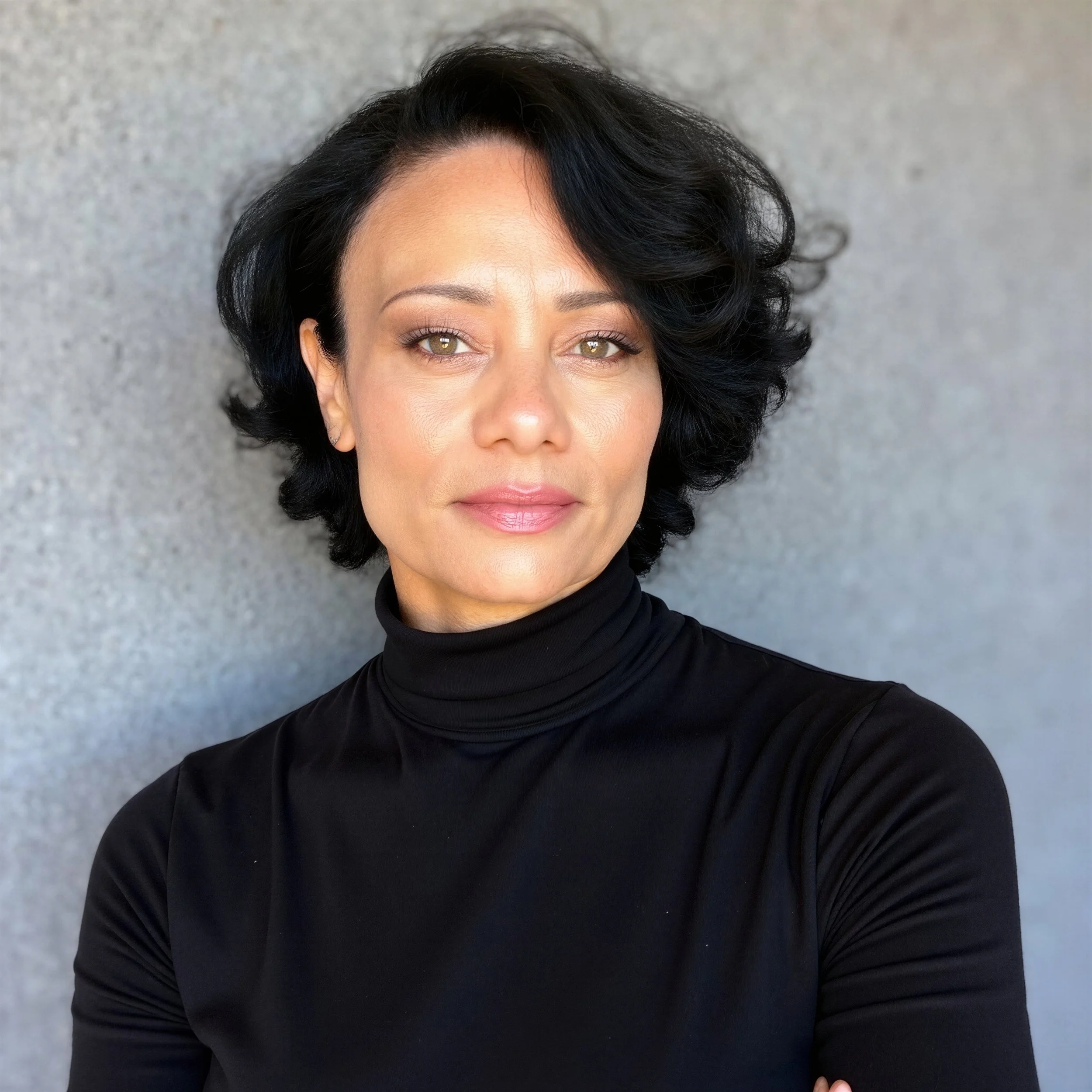
Angeline Ash, J.D.
Vice President & Co-Founder, The Avo Sangro Research Archive & Development Lab

Curator, The Avo Sangro Manuscripts
Co-Founder, The Avo Sangro Research Archive & Development Lab